

The Mirror Box
How Things Separate

I read with Katie Naughton and Caroline Crumpacker a week ago at Pete’s Candy Store in the Imaginary Elegies series. Cole Heinowitz’s absence was a trembling presence in that little guitar of a room.
From “Threshold”, the first poem Katie Naughton read, and the first poem in her collection Debt Ritual–
a word is a theory
of how things separate
I got caught up thinking about that for a while, seeing in my mind’s eye a kind of gel medium that causes the word to evanesce like a vapor out of the object it describes. The object remains, one can examine it under a microscope and wonder at its cellular patternicity, its subatomic abstractions, while the word evanesces, disappearing like a ghost.
That is, a ghost is also ‘a theory / of how things separate’, appears and disappears like a word (for example, the word ghost). (I once moderated a panel in which Rae Armantrout asked V.S. Ramachandran, inventor of the mirror box and theorizer of the function of mirror neurons, “What is like like?” To which he replied, “We’re not there yet.”)
A line break is also a theory of how things separate, or open, so that jokes and truths can slip in. I laughed when I registered the line that followed what I experienced as a line break here, in this poem of Crumpacker’s–
the ranch house
that nightmare of form
I might have imagined the line break. I have heard, that is to say, but have not seen. It could have been a comma:
the ranch house, that nightmare of form
Or even an ellipsis:
the ranch house . . . that nightmare of form
Crumpacker grew up in a ranch house, so she knows how the sleep of reason produces boxes. The end of Naughton’s poem “Threshold” speaks to how buildings, separative, are also like words, and ghosts:
but buildings
are theories
of how
things separate
Paul Tillich argued that what is meant by the word ‘sin’ is better described by the word ‘separation’ and that separation (‘sin’) is a state. Exactitude in language is reparative.
In the novel The Deep North by Fanny Howe, the ruminating character G’s psyche is impinged by words, is caught up in their maelstrom: “Divorce, divorce, was the word in her head. Divorce, and worse, mortal, torn, divide, unborn . . . And she leaned down her head, the engine rumbling against her feet, and her mind was led by words, one after another, away from the safety of its own control, but spilling forth, as if pressed upon to bursting . . .”. Finally, the liberating word comes to G: “Despair, the word, cane like a sweet-dropping medicine, a coat of taste for her fear. Never had a word had such reverberating power for her. Never had one word been so strong it could humiliate all the little psychological bits and pieces, those labels that peeled off like slogans in a long rain.”
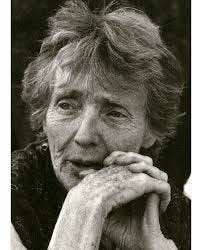
Fanny Howe became an ancestor this year, along with Cole Heinowitz and so many other luminous writer-beings such as Alice Notley, Ngũgĩ wa Thiong’o, Lyn Hejinian, Joshua Clover, Joanna Macy, and Alphonso Lingis.
In On Learning to Heal by Ed Cohen he writes of a healing that is nonetheless “not antideath because death is not the opposite of life . . . Death is entailed in life. As embryos, the preponderance of our cells must die . . . billions of our cells die daily . . . death is not the opposite of life, it forms one of its conditions of possibility, one of its tendencies . . . death is not the enemy of healing.”
Cohen distinguishes between indeterminate processes of healing rooted in the desire for possibilities, and the teleology of cure premised on probabilities and the uses of reductionism and mechanism, use/full practices of separation that are inseparable from Claude Bernard’s introduction of the language of warfare into medicine, and the concomitant rationalization of the torture of ‘laboratory animals’ (note how the word ‘laboratory’ separates beings thus predicated into the category of torturable).
Western medicine’s focus on curing, Cohen argues, with all its astounding benefits, brackets enigmas of healing, the organisms’ capacities for self-repair.
As probabilities are to cures, so possibilities are to healing:
“Probability seeks to contain uncertainty by converting its troubling ambiguities into numbers, thereby giving it the veneer of knowability and predictability. And since medicine trades in the therapeutic power of knowledge, it prefers to think in terms of probabilities rather than possibilities. However, the probable is not the same as the possible, because probability only pertains to phenomena whose regularities we can calculate.”
He writes of recovering from a disease that he nearly died of at a young age. He has been hospitalized for months after many life-saving surgeries. And then “A boy with whom I was madly but unrequitedly in love appeared at the door of my room, and I held out my IV-studded hand. When he took it, a surge of light went through me, and something changed. Though I had no idea at the time, I now mark that as the moment that life returned me to the world.”
Here the besieged body, fraught with separations and losses of bounded membrane, saved by surgical cuts, is met; unseparated; joined through one hand holding another, and this “returned me to the world.” The world becomes that which may be returned to through love. The possible, as he describes its inherence to healing, emanates from outstretching desire.